THE REVELATION
OF ST JOHN THE DIVINE
CHAPTER 4
John sees the celestial earth, the throne of God, and all created things worshipping the Lord.
[ Chapter four transitions John's writing from specific matters written toward the seven churches to the introduction of the son and then the introduction of the Father in chapter 5. These chapters are authoritive in nature and set up chapter six. As a reult of this authority that is held buy the Father and the son they can do as they fit since it is his creation and he willbe the judge. The are written as documentary as John saw into heaven.The language and symbolism of this chapter is very similar to the visions recorded in Isa. 6, Ezek. 1, and Ezek. 10. John’s vision of heaven is similar in content and to those of the preceding prophets. This indicates synchronicity between himself and the preceding prophets, and also serves to draw on the preceding body of prophetic literature and rhetorical style when it comes to interpreting symbols he employs. ]
1 A
FTER this I looked, and, behold,
a door was opened in heaven: and the first voice which I heard
was as it were of a trumpet talking with me; which said,
Come up hither,
[ “a door...Come up hither”, John is a mortal on earth and is summoned to transcend that mortality and enter in heaven to witness the apocalypse. The imagery used conveys the idea that heaven is above and separate from this mortal world we live in. ] and I will shew thee things which must be hereafter.
2 And immediately
I was in the spirit:
[ Spiritual things are discerned by the Spirit, not by the flesh, cp. 1 Cor. 2:14. ] and, behold, a throne was set in heaven, and
one sat on the throne.
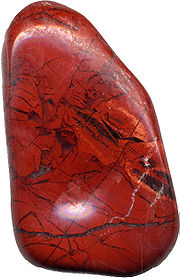
3 And he that sat was to look upon like a jasper [ Jasper, is an opaque,[2] impure variety of silica, usually red, yellow, brown or green in color; and rarely blue. This mineral breaks with a smooth surface, and is used for ornamentation or as a gemstone. It can be highly polished and is used for vases, seals, and at one time for snuff boxes. Jasper is known to have been a favorite gem in the ancient world. ] and a sardine stone: and there was a rainbow round about the throne, in sight like unto an emerald.
4
And round about the throne [ The IV/JST emends this to “And in the midst of the throne” which is more suggestive of unity, cp. D&C 29:13. ] were four and twenty seats: and upon the seats [ The translation of the KJV “seats” would be better translated “thrones” as it is the identical Greek “thronos” translated to “throne” earlier in the verse in reference to God's throne. It is easy to assume the translators of the KJV were loathe to exalt the 24 thrones to the same status of God's. ] I saw four and twenty elders sitting,
[ D&C 77:5 Q. What are we to understand by the four and twenty elders, spoken of by John? A. We are to understand that these elders whom John saw, were elders who had been faithful in the work of the ministry and were dead; who belonged to the seven churches, and were then in the paradise of God.Seven does not divide evenly into 24, so one must look for meaning elsewhere. Perhaps it represents two witnesses for each of the 12 tribes of Israel. ] clothed in white raiment; and
they had on their heads crowns of gold.
[ The Greek term for the KJV “crown” is “stephanos” and would be better translated “wreath” or “garland”. This is the same crown referred to in 3:11, and 4:10. ]
5
And out of the throne proceeded lightnings and thunderings [ Since the thunder comes from the throne of God it is an authority statement that nature submits to the will of God compare Exod 19:16. ] and voices:
[ Nature does not have a voice per se but does sound with the sound of thunder. “voices”, the Greek term is “phone” (pronounced: foe-nay) and means any sound that is articulated by the ear. Oftentimes it is clearly a human voice by context, but other times it is ambiguous what the sound is. The KJV translators consistently translate the term to “voice” or “voices” in this book. However, 4.4 in the case where it is combined with “lightening and thunder” it can be just as fairly translated “lightening and thunder and noises” as the context does not suggest a human voice. ] and
there were seven lamps of fire burning [ Compare Matt 25:1 they have oil in their lamps, symbolic that they enjoy spitirtual power, authority and guidance and priesthood that emanate from the throne. ] before the throne, which are
the seven Spirits of God.
[ The IV/JST emends this to “the seven servants of God”. ]
6 And
before the throne [ So we begin at the throne of God. Around that throne are four beasts. ] there was a sea of glass like unto crystal:
[ Symbolic of the earth in its future sanctified state, cf. D&C 77:1. 1 Q. What is the sea of glass spoken of by John, 4th chapter, and 6th verse of the Revelation? 4.5 A. It is the earth, in its sanctified, immortal, and eternal state. This passage is clearly to be taken figuratively. While the earth we live on is not presently sanctified, one could presume there are other worlds which are in that sanctified state. Whta does a sea of glass represent symbolically? We for one the ability to see everything as it really is, also to see all things in the present, past and future states at the same time. like an Urim and Thummim. The sea of glass seems to take on qualities of the Urim and Thummim. In the early Israelite tabernacle and temple, the high priest also carried two clear stones known as “Urim and Thummim” or “lights and perfections” in Hebrew (Ex 28:30; Lev 8:8; Num 27:21; Deu 33:8; 1 Sam 28:6; Ezr 2:63; Neh 7:65; JS-H 1:35).
Joseph further explained this “sea of glass” at a General Conference in Nauvoo, IL on 2 April 1843: “Angels do not reside on a planet like this earth. But they reside in the presence of God—but on a Globe like a ‘sea of glass and fire’ where all things are manifest past, present, and to come—the place where God resides is a great Urim and Thummim… This earth in its sanctified and immortal state will be a Urim and Thummim for all things below it in the scale of creation, but not above it” (Ehat, Words JS, 171). ] and
in the midst of the throne, and round about [ The IV/JST inserts “were the four and twenty elders” after the “throne” to make it clear that the elders and beasts were all present before God's throne, but only the elder's thrones were “in the midst” of God's throne. The emendation harmonizes this verse with 5:6. ] the throne,
were four beasts [ Cherubim/Seraphim. These same beasts are seen by Isaiah who names them Seraphim, Exekiel names them both living creatures as well as Cherubim, hear we have John refer to them as Holy beasts. Either way all three had the same basic definition - they were all wing men, standing by the throne of God with a burning altar nearby. 2 Q. What are we to understand by the four beasts, spoken of in the same verse? A. They are figurative expressions, used by the Revelator, John, in describing heaven, the paradise of God, the happiness of man, and of beasts, and of creeping things, and of the fowls of the air; that which is spiritual being in the likeness of that which is temporal; and that which is temporal in the likeness of that which is spiritual; the spirit of man in the likeness of his person, as also the spirit of the beast, and every other creature which God has created. 3 Q. Are the four beasts limited to individual beasts, or do they represent classes or orders? A. They are limited to four individual beasts, which were shown to John, to represent the glory of the classes of beings in their destined order or sphere of creation, in the enjoyment of their eternal felicity. 4 Q. What are we to understand by the eyes and wings, which the beasts had? A. Their eyes are a representation of light and knowledge, that is, they are full of knowledge; and their wings are a representation of power, to move, to act, etc. These beasts are quite similar to the cherubim of Ezek. 1, but here the beasts are presented as separate beasts where in Ezekiel's vision the cherubim are compound figures. ] full of eyes before and behind. [ Eyes are symbolic of Omniscience, they are a representation of light that is they are full of knowledge (D&C 77:4). So if they are covered with eyes in the front and back we have a symbolism of the ability to see everything that has happened and everything that will happen - or in a way the ability to see things as they were as they are and as they will become. ]
7 And the
first beast was like a lion,
[ Lion is the symbol for the tribe of Judah. They are around the throne of God being resurrected animal. Let us assume that the lion and the calf and the eagle are all selected based on the symbolic value of each. The Lion symbolically represents Majestic, dignity, mighty, courageous - King of Beasts. Each of these are symbolic and represents one of the four camps of Israel and their individual flags. ] and the
second beast like a calf,
[ Or oxen the tribe of Ephraim. ] and the third beast had a face as a man, and the fourth beast
was like a flying eagle.
[ The most majestic of birds, flys high in the heavens overlooking all with its excellent eyesight and stamina. ]
8 And the four beasts had each of them six
wings [ "Their wings are a representation of power, to move, to act, etc. " (D&C 77:4) ] about
him; and
they were full of eyes within: and they rest not day and night, saying,
Holy, holy, holy,
[ Most holy. ] Lord God Almighty, which was, and is, and is to come.
9 And when
those beasts give glory and honour and thanks to him [ The animals acknowledge and give thanks and worship him for all that he has done for them. ] that sat on the throne, who liveth for ever and ever,
10
The four and twenty elders [ During this period of time the idea was the common belief of the people that if you doubled a number you perfected it. God has often held to the order of twelve. So we have double the normal twelve apostles who are all worthy and are giving their all to worship God. Interesting number 24, 12 apostles from the time of Christ match up with the 12 then current members of the quorum of twelve. (D&C 77:5) ] fall down before him that sat on the throne, and
worship him [ They are gratedful to what he has done for them. ] that liveth for ever and ever, and cast
their crowns [ Representing their exaltation (cf. 2:26-27, 3:5, 3:11, 3:19-22, 21:5-7, also cp. 1 Cor. 9:24-25, Hebr. 2:6-10). ] before the throne,
[ Symbolic of the fact that he is the source of their exaltation and they are acknowledging that by casting their crowns at his feet, or deferring to him as their master. This is symbolic of how the camps of Israel were in a circle all around the tabernacle of God. ] saying,
11 Thou art worthy, O Lord, to receive glory and honour and power: for
thou hast created all things, and for thy pleasure they are and were created.
[ Same theme as found in Moses 1:39 "The work and glory of God is the immortality of man" ]